
Maximizing Efficiency Through Route Optimization for Pet Waste Removal Businesses
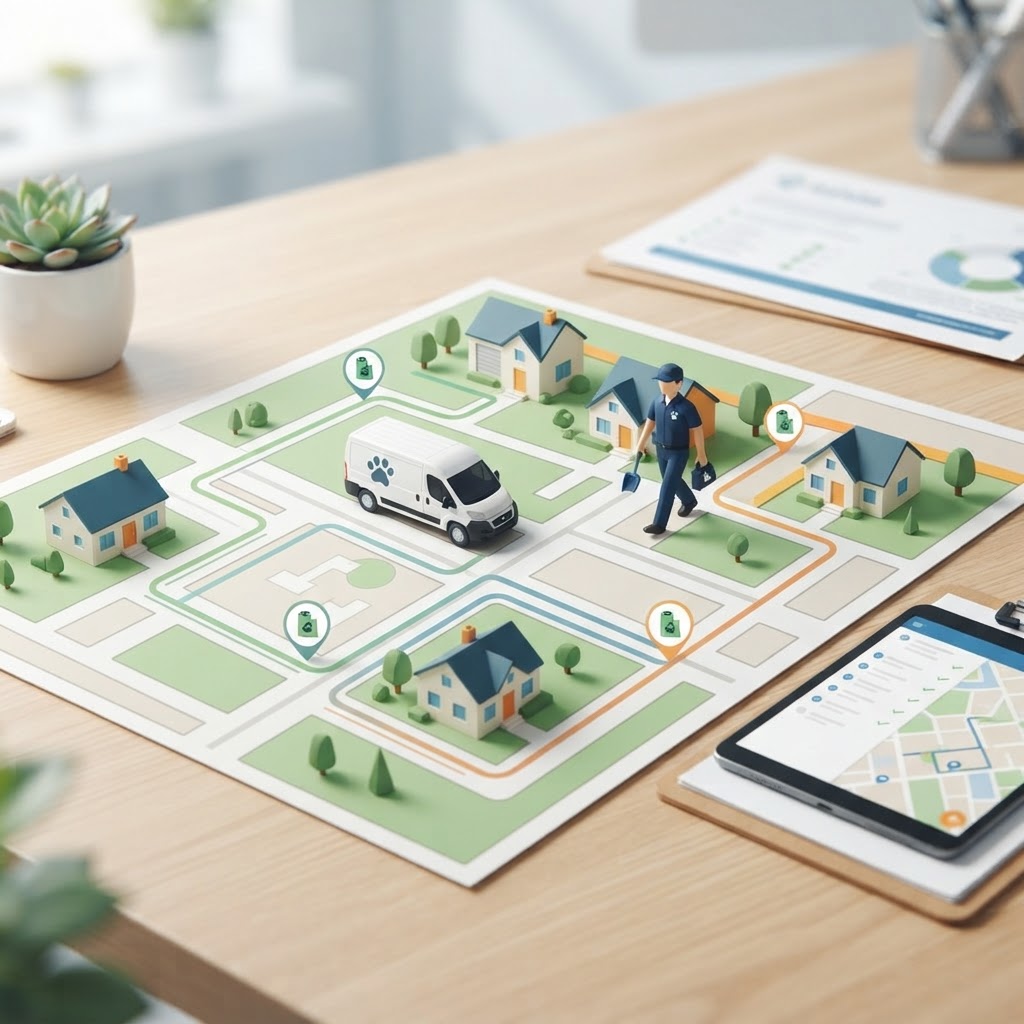
The Economics of Drive Time for Pet Waste Operators
Pet waste removal business operators lose money every minute they spend behind the wheel rather than scooping yards. Because the time spent driving between client properties represents unpaid labor, route density is the single most important factor determining the daily profit margin of a pooper scooper business. Increasing the number of yards serviced per day requires minimizing the time spent navigating traffic and distance rather than simply increasing speed or working longer hours.
Utilizing Interactive Mapping for Logical Stop Sequences
Pet waste removal operators can visualize their entire daily workload by plotting all service stops on a single interactive map. Viewing client locations geographically allows the operator to see natural clusters and identifying gaps in density that might currently be causing unnecessary travel. Mapping tools help transform a random list of addresses into a logical, geographic sequence that flows naturally across a service area.
Optimizing Routes Based on Real Road Distances
Pet waste removal business owners should use software that calculates routes based on real driving distances rather than straight lines on a map. Real world routing accounts for one way streets, bridge crossings, and highway access points that create significant variations in actual travel time. Selecting a path that follows actual road networks ensures that the sequence provided to the crew is the most efficient one available for their vehicle.
Vetting New Customers for Geographic Density
Pet waste removal operators should check whether a new client fits into an existing route before officially accepting the job. Taking on a high value client who is located miles away from any other stops can disrupt an efficient route and lower the profitability of the entire service day. Evaluating the geographic impact of a new address allows the operator to maintain a tight, dense service loop that keeps travel time to a minimum.
Protecting Established Schedules with Route Locking
Pet waste removal business owners can preserve critical client relationships by using route lock features for specific service sequences. Route locking prevents automated software from rearranging sequences that have been perfected to meet specific arrival windows or client preferences. Locking a sequence ensures that stable, high priority stops remain undisturbed while optimization is applied to the remaining flexible stops in the schedule.
Managing Multi-Day Planning Across Teams
Pet waste removal operators managing multiple crews need to coordinate service schedules across several days to maximize regional coverage. Planning across multiple days allows the business to designate specific zones for specific days, which prevents crews from crossing paths unnecessarily. Coordinated multi-day planning helps ensure that equipment and personnel are allocated to the most dense areas of the business territory.
Monitoring Real-Time Crew Progress
Pet waste removal business managers can track the real-time progress of their field teams to identify delays in the schedule as they happen. Real-time updates allow the operator to adjust the remainder of the route if a crew falls behind due to traffic or unexpectedly complex jobs at a specific site. Keeping an eye on active route progress ensures that the day ends on schedule and helps inform future route adjustments.
Analyzing Route Metrics for Performance Insights
Pet waste removal business owners should regularly review route metrics including the total number of stops, total distance traveled, and total drive time. Tracking these metrics reveals the relationship between the number of yards serviced and the revenue generated per hour of operation. Analyzing these numbers over several months provides the data needed to refine routing strategies and improve overall business efficiency.
Introducing Gradual Routing Changes to Long-Term Clients
Pet waste removal operators should introduce significant route optimization changes gradually to avoid surprising loyal customers with new arrival times. Providing advance notice or shifting arrival windows by small increments allows regular clients to adjust their routines without feeling like the service has become unreliable. Maintaining clear communication during the optimization process preserves the trust and consistency that keeps long term clients satisfied.
Streamlining Your Business with ScooPilot
ScooPilot offers pet waste removal operators a comprehensive suite of tools designed to connect customer management, scheduling, routing, and billing in one platform. By utilizing the integrated mapping and routing capabilities within ScooPilot, business owners can identify inefficiencies and plan denser, more profitable service days. Try the ScooPilot live demo to see how these tools function in a real-world setting, or Explore ScooPilot features to learn more about our operational solutions.
Ready to see it in action?
Explore how ScooPilot connects customer management, scheduling, routing, and billing for pet waste businesses.
Try the ScooPilot live demo