
Mastering Route Efficiency for Growing Pet Waste Businesses
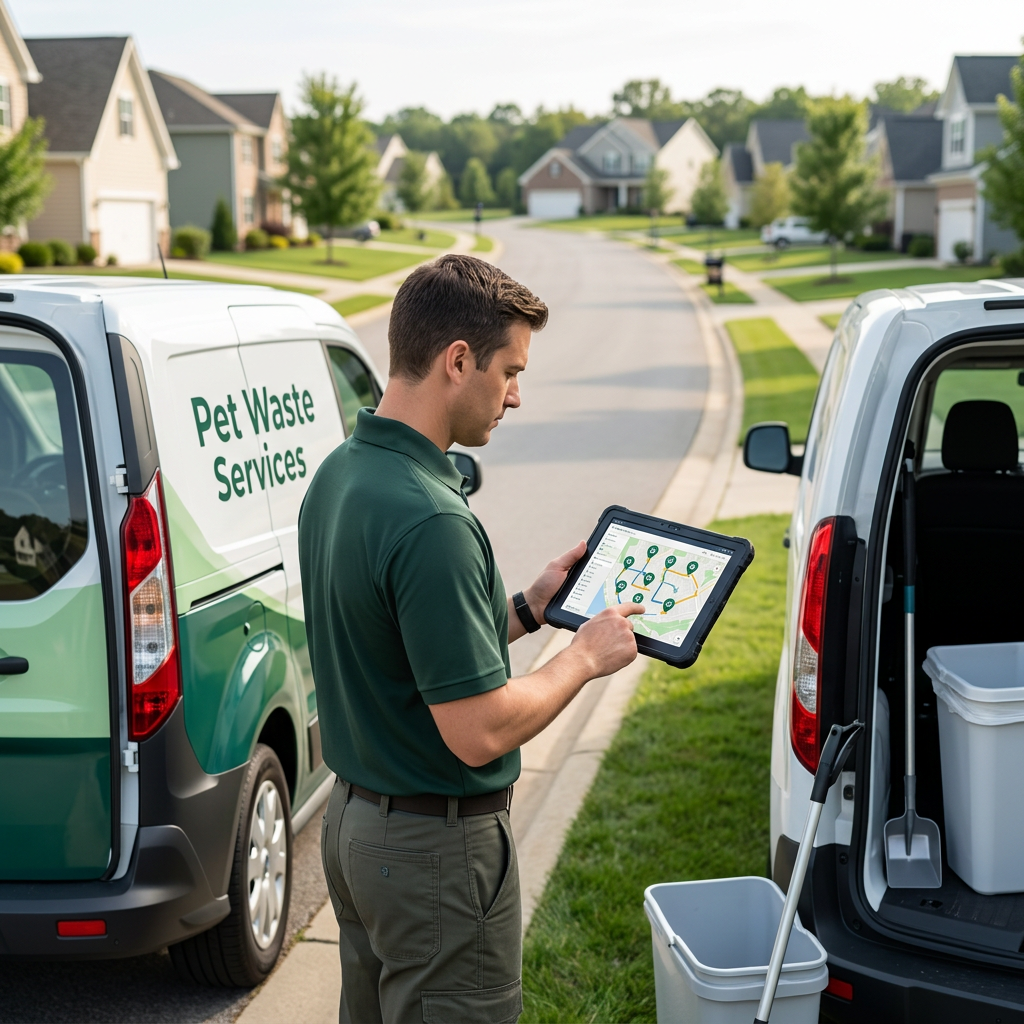
The Importance of Density for Pet Waste Operators
Pet waste removal business operators achieve maximum profitability by prioritizing stop density over total stop volume. A scattered route forces a technician to spend more time driving between yards than scooping waste, which directly increases fuel consumption and reduces the number of properties one person can service in a shift. Focusing on compact, high-density zones allows operators to maximize the number of clients serviced per hour while minimizing engine wear and travel time costs.
Conducting a Weekly Density Review
Successful pet waste business owners should review their route density every single week to identify growing gaps or inefficient clusters. Analyzing the map reveals whether current routes are becoming too spread out as new customers are added in outlying areas. Regular reviews prevent the common pitfall of letting a route expand organically until it becomes impossible to service within a standard shift.
Rebalancing Days and Crews Using Real Driving Distances
Pet waste operators must use real driving distances rather than straight line estimations when rebalancing their service days and crew assignments. A straight line ignores one-way streets, bridge crossings, and traffic patterns that drastically alter the actual time spent on the road between two addresses. Calculating routes based on true road navigation data ensures that crew schedules remain realistic and that employees do not burn out from overly ambitious daily goals.
Protecting Strategic Sequences with Route Lock
Operators of growing pet waste businesses should utilize a route lock function to protect high-performing sequences from unintended automated changes. While software can offer helpful suggestions, the human operator often knows specific access codes, gate nuances, or pet temperaments that make a specific sequence essential. Keeping these proven sequences locked ensures that the most efficient patterns remain consistent even when the broader system undergoes optimization updates.
Vetting New Customers for Route Fit
Pet waste business owners should verify a new customer's location fit before confirming their service start date. Adding a client that is miles away from an existing cluster often creates a drain on efficiency that outweighs the value of the new monthly invoice. Checking the map against current service zones during the onboarding process helps maintain route integrity and profitability from the very first visit.
Streamlining Operations with ScooPilot
The ScooPilot platform provides pet waste operators with essential tools for managing growth through route optimization, route lock, and multi-day planning capabilities. These tools allow business owners to visualize density, lock in successful sequences, and balance the workload across multiple crews with precision. Pet waste business operators should consider these features as the practical next step for scaling their service area while maintaining high standards of efficiency. Please visit the Try the ScooPilot live demo page to see these tools in action or Explore ScooPilot features to learn more about our full suite of scheduling and management services.
Ready to see it in action?
Explore how ScooPilot connects customer management, scheduling, routing, and billing for pet waste businesses.
Try the ScooPilot live demo