
A Monthly Profit Review: A Guide for Pet Waste Business Operators
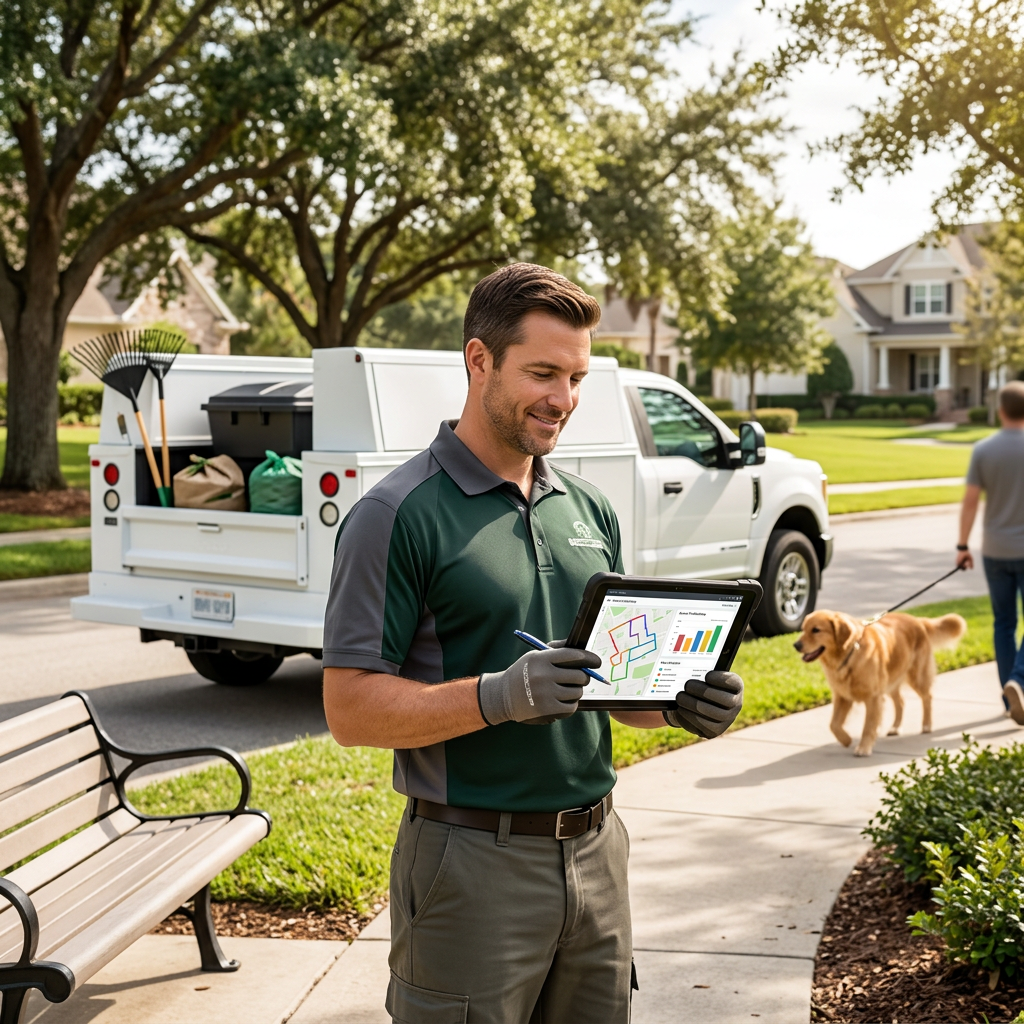
The Importance of Monthly Route Profit Reviews for Pet Waste Businesses
Pet waste removal operators must conduct a monthly profit review by route to maintain business health. This routine involves isolating the specific costs of servicing each property and comparing those costs against the revenue generated from that individual stop.
Why Revenue Per Stop Is a Misleading Metric
Pet waste business owners often mistake high revenue per stop for high profitability. Revenue per stop fails to account for the hidden costs of time, fuel, and vehicle wear involved in reaching geographically isolated yards. Profitable operations require calculating the true margin by subtracting the cost of service from the total revenue received from each customer.
How to Map Route Profitability Effectively
Pet waste operators should treat route profit maps as indicators of geographic zones rather than collections of single yards. When a cluster of customers produces a low net return, the issue often stems from the distance between stops or the time required for travel rather than the service itself. Mapping these zones allows operators to see where density is lacking.
Establishing a Repeatable Profitability Routine
Pet waste business operators should follow a consistent monthly sequence to ensure financial clarity. First, export the revenue and mileage data for every customer in a route. Second, flag individual stops that fail to cover the variable costs of fuel and labor for that specific service day. Third, compare the price charged at each stop against the true cost of reaching that property.
Actions for Low Profit Stops
Pet waste business operators must take decisive action once an unprofitable stop is identified. Options include increasing the service price to reflect the distance or time intensity, grouping the stop differently to maximize proximity to nearby clients, or dropping the stop entirely if it cannot be serviced efficiently. Each decision should focus on long-term sustainability rather than immediate volume.
Prioritizing Repairs with Business Assessment Tools
Pet waste business operators can use AI business assessment tools to determine which route issues to fix first. These systems analyze historical performance data to highlight the specific routes or client clusters that drain the most resources. Operators can then direct their limited time toward the most impactful adjustments, such as rerouting high-mileage zones.
Using ScooPilot for Your Monthly Profit Review
ScooPilot provides the necessary infrastructure for pet waste business operators to conduct these monthly profit reviews efficiently. The platform integrates customer management, scheduling, and billing into a unified system that generates the data required to isolate route profitability. Operators can Try the ScooPilot live demo to see how these tools work in practice. You may also Explore ScooPilot features to learn more about how our routing and scheduling capabilities support your business management goals.
Ready to see it in action?
Explore how ScooPilot connects customer management, scheduling, routing, and billing for pet waste businesses.
Try the ScooPilot live demo